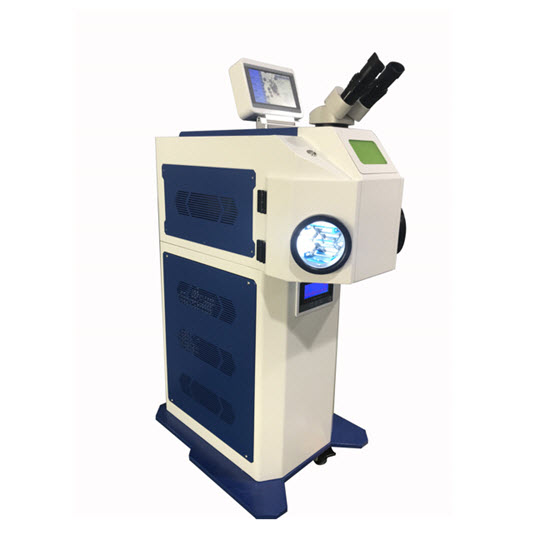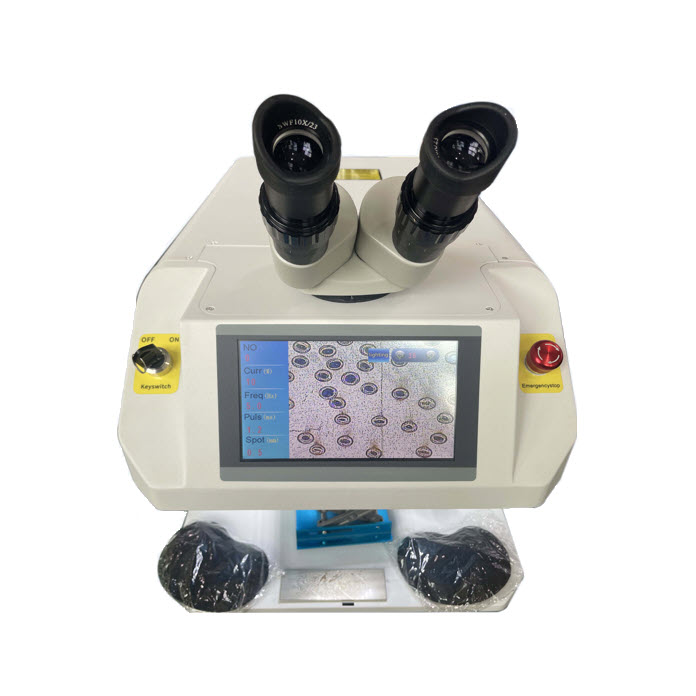

Fiber Laser Welding Aluminum
2025-05-20With the continuous improvement of modern manufacturing industry's requirements for material properties and processing efficiency, aluminum alloy, as a lightweight, high-strength and corrosion-resistant metal material, is widely used in aerospace, automobile manufacturing, electronic equipment and new energy fields. However, due to its high reflectivity, strong thermal conductivity and easy oxidation, the traditional welding process of aluminum alloy faces many challenges. In recent years, fiber laser welding technology has gradually become an important solution in the field of aluminum alloy welding with its unique advantages. In this post, we will share the advantages and application cases of aluminum laser welding with you.
I. Overview of Fiber Laser Welding Technology
Fiber laser welding is an advanced welding method that uses a high-energy-density laser beam as a heat source to locally heat metal materials to a molten state and achieve connection. Compared with traditional CO₂ lasers, fiber lasers have higher photoelectric conversion efficiency, better beam quality and more stable output performance, and are particularly suitable for precision and high-speed welding.
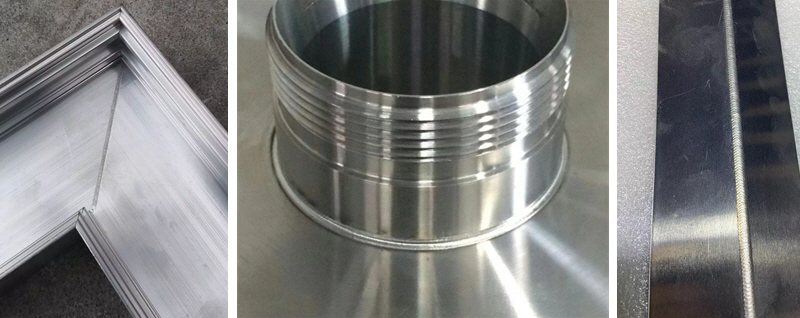
II. Advantages of Fiber Laser Welding Aluminum Alloys
• High energy density and strong deep melting welding ability: Fiber lasers can provide extremely high energy density, which can quickly melt or even vaporize the surface of aluminum alloys to form a "keyhole effect", thereby achieving deep and narrow welds and significantly improving welding strength and sealing.
• Fast welding speed and high production efficiency: Compared with traditional TIG or MIG welding methods, fiber laser welding is faster, with lower heat input, reducing the heat affected zone (HAZ), and effectively avoiding weld deformation and grain coarsening problems.
• Non-contact processing and high precision: Laser welding does not require physical contact and can achieve micron-level positioning, which is suitable for precision welding of complex structural parts, especially for automated production line integration.
• Strong adaptability and compatibility with a variety of aluminum alloy materials: Fiber lasers can flexibly adapt to different grades of aluminum alloys (such as 6061, 5052, 7075, etc.) by adjusting power and pulse parameters to meet diverse industrial needs.
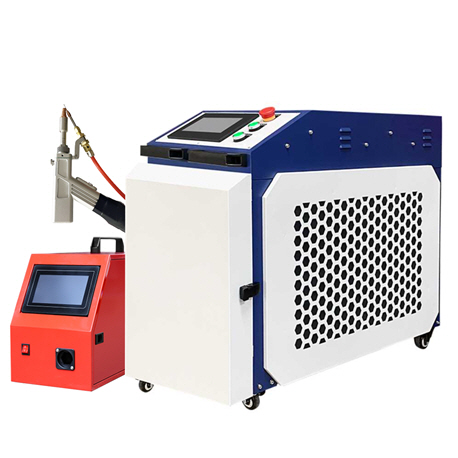
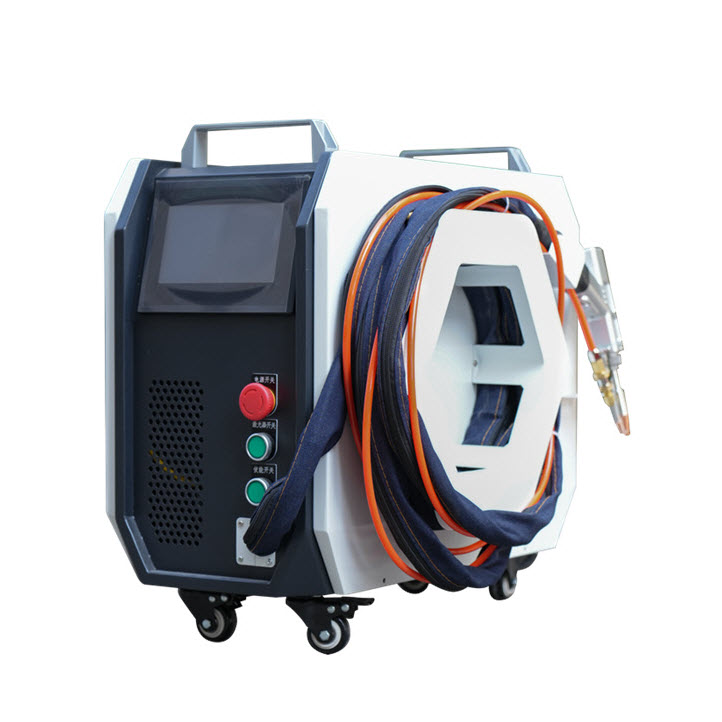
This video demonstrates one of our customers using a 1070nm 2000W handheld fiber laser welder to weld one piece of aluminum alloy onto another. The operator, holding a lightweight welding torch, moves smoothly along the seam between the two aluminum alloy plates. We can clearly see the laser beam instantly creating a bright and focused spot at the contact point, demonstrating the high energy density of the laser. Unlike traditional welding methods, the entire laser welding process produces significantly less sparking, resulting in a smoother, more aesthetically pleasing weld with a minimal heat-affected zone, effectively preventing deformation and undercut issues caused by high heat input in the aluminum alloy. Please feel free to contact us for more details.
III. Which Types of Aluminum Alloys Can Be Welded Using a Fiber Laser Welder, And Which Cannot?
Fiber laser welding machines, with their high energy density and precise thermal control, can effectively weld various types of aluminum materials, making them a key technology for joining aluminum alloys in modern industry. Let's take a look at which types of aluminum alloys can be welded using fiber lasers and understand the differences in welding different series of aluminum alloys:
1xxx series (pure aluminum, such as 1060, 1070): Possesses excellent electrical conductivity, corrosion resistance, and formability, and is commonly used in electrical and chemical equipment. Laser welding typically requires lower power density.
3xxx series (Al-Mn alloys, such as 3003, 3A21): it offers good corrosion resistance and formability, and produces high-quality laser-welded joints, making it ideal for laser welding. Therefore, it is suitable for thin sheets and components in building applications.
5xxx Series (Al-Mg): These aluminum alloys are generally considered to have good weldability and are commonly used materials for laser welding. During welding, the molten pool has good fluidity and a low tendency to crack.
6xxx Series (Al-Mg-Si): It is widely used in laser welding, but the main challenge in welding them lies in the softening of the heat-affected zone (HAZ) and high susceptibility to hot cracking, thus requiring more precise heat input control. It should be noted that 6000 series aluminum alloys are prone to cracking if welding wire is not used during welding, so 4000 series or 5000 series welding wire must be used.
4xxx Series (Al-Si): It is often used as filler wire (such as ER4043) for laser welding other series of aluminum alloys to reduce the tendency of the weld to hot crack.
2xxx series (Al-Cu) and 7xxx series (Al-Zn-Mg-Cu): These are high-strength aluminum alloys, but they are extremely difficult to weld, mainly due to their high sensitivity to hot cracking and porosity. Generally, the two series of aluminum alloys cannot be welded.
IV. Application Fields of Fiber Laser Welder for Welding Aluminum
In daily life and industrial manufacturing, aluminum alloys are important components of many items, such as electric vehicle battery packs, aircraft structures, mobile phone shells, laptop computer shells, etc. Therefore, aluminum welding technology is particularly important. The quality of welding directly determines the stability and safety of the product's electrical connection, structural strength and fatigue life, sealing performance, appearance effect, etc. Due to the unique advantages of fiber laser welding, it is widely used in new energy vehicles, aerospace, consumer electronics manufacturing and other fields to achieve high-quality joining and precision high-speed welding.
• Note: In the actual operation process, it is difficult to optimize the process parameters of aluminum alloy laser welding. It is necessary to continuously adjust the power, speed, defocus and other parameters for different thicknesses and types of aluminum alloys to obtain the best welding quality.
V. Can Aluminum Be Laser-Welded to Other Metals?
Aluminum can be laser-welded to other metals, but this is dissimilar metal welding, which is far more technically challenging than welding similar metals. The most common application is joining aluminum with steel to achieve lightweight structures (e.g., in automobile manufacturing). However, due to the significant differences in the physical and chemical properties of the two metals, direct fusion welding is almost impossible.
█ Why is welding aluminum to other metals so difficult?
Welding aluminum to metals like steel presents three fundamental challenges:
1. Significant melting point difference: Aluminum melts at approximately 660°C, while steel melts at over 1370°C. During welding, by the time the heat is sufficient to melt the steel, the aluminum has already melted or even vaporized, making it impossible to form a stable common weld pool.
2. Mismatched coefficients of thermal expansion: Aluminum expands and contracts much more rapidly when heated and cooled than steel. This inconsistent deformation generates significant internal stress at the joint, easily leading to deformation or even cracking of the weld during or after cooling.
3. Formation of Brittle Intermetallic Compounds (IMCs)
This is the most critical challenge. When liquid aluminum comes into contact with solid or liquid steel, a chemical reaction occurs at the interface, forming a hard and brittle iron-aluminum intermetallic compound (such as FeAl₃, Fe₂Al₅). This brittle phase, like glass, severely weakens the joint's strength and toughness, making it prone to breakage under stress.
█ How does laser technology achieve the joining of aluminum with other metals?
Despite the numerous challenges, modern laser welding technology offers a solution to this problem through precise heat input control. The mainstream process is not "fusion welding," but laser welding-brazing. The energy of the laser beam is precisely controlled, primarily acting on the aluminum side to melt it; simultaneously, heat is conducted to the steel, heating it only to a "red-hot" state (below its melting point). The molten aluminum (as the filler metal) wets and spreads on the surface of the solid steel, forming a strong metallurgical bond upon cooling.
However, when using fiber laser welding equipment, precise thermal control is required, and specific welding wires are used to suppress the formation of brittle iron-aluminum compounds, thereby obtaining joints with better performance. Furthermore, beam oscillation technology is used to stir the molten pool, improving weld formation and reducing defects such as porosity and undercut, further enhancing joint quality.
Fiber laser welding technology is becoming the mainstream choice in the field of aluminum alloy welding with its high efficiency, high precision and good adaptability. With the continuous advancement of technology, its application prospects in emerging industries such as new energy and intelligent manufacturing are broad. For enterprises, mastering the core technology of fiber laser welding will help improve product quality, reduce production costs and enhance market competitiveness. If you are interested in NITRATEK aluminum fiber laser welding machine, please contact us for more details and we will offer the most preferential price for you.