
Laser Marking on Paper
2026-03-21In the era of convergence between digital manufacturing and personalization, laser marking technology is revolutionizing paper processing. If you're wondering whether lasers can achieve efficient marking on paper, the answer is undoubtedly yes: lasers can not only mark various personalized content on paper, but also empower applications across all dimensions, from industrial marking to artistic engraving. It breaks through the physical limitations of ink printing, improving production efficiency and information durability while opening up new technological paths for brand storytelling, anti-counterfeiting traceability, and customized design. CO₂ laser marking systems, with their non-contact, high-precision, and zero-consumable advantages, have long been a secret weapon for the functionalization and aesthetic upgrading of paper products. This not only significantly improves production accuracy and environmental efficiency but also unlocks the infinite creative possibilities of paper. NITRATEK Laser will provide an in-depth analysis of how laser marking technology is making significant strides in the paper industry, injecting new vitality into the sector with intelligence and high added value.
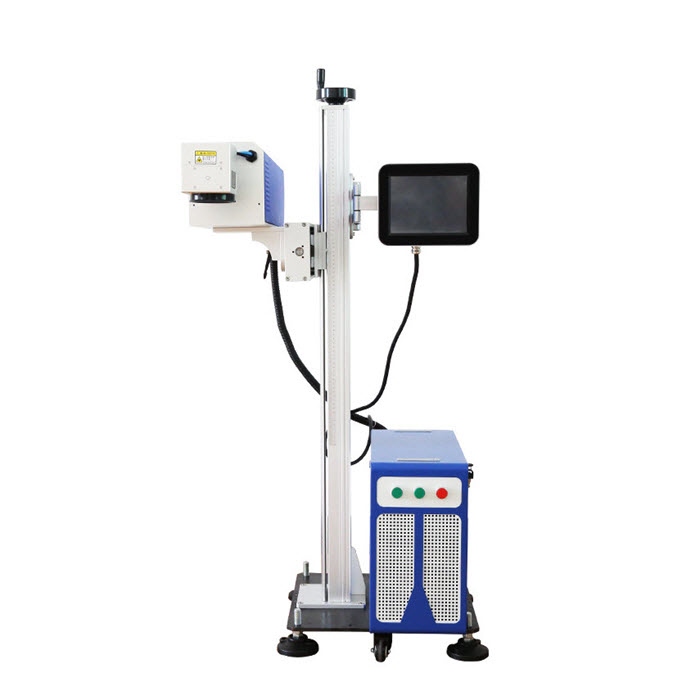
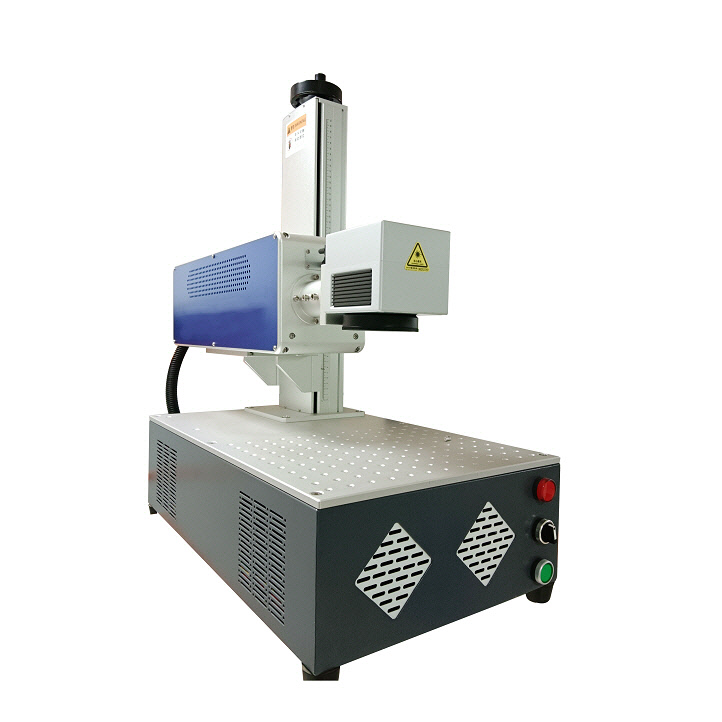
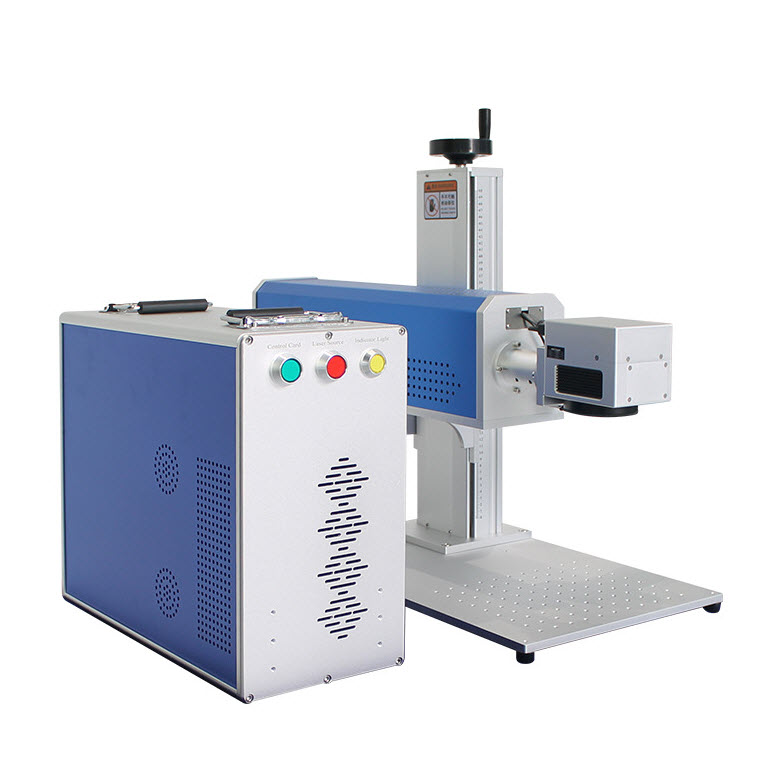
The above video shows the NITRATEK 30W CO₂ laser marking machine making precise marks on a paper gift box. The process settings include a scanning speed of 1000-2000mm/s and a pulse frequency of 5-10kHz. This parameter combination precisely matches the absorption characteristics of the paper material, effectively suppressing heat accumulation and ensuring continuous, uninterrupted lines with uniform color depth. The CO2 laser marking system demonstrates excellent galvanometer dynamic response and beam control capabilities, perfectly rendering the details of text and trademarks, making it suitable for high-efficiency, high-quality marking processing on high-end packaging.
I. How Does Laser Marking Work on Paper?
The ability of laser marking machines to achieve clear, permanent, and diverse markings on paper lies in the physical interaction between a specific wavelength of laser light and the paper material. In the paper industry, CO₂ laser marking machines are the most commonly used. The 10.6μm wavelength of the CO₂ laser is efficiently absorbed by the cellulose in paper. Through precisely controlled photothermal effects, it induces surface color changes (carbonization) or micro-removal (micro-engraving) without damaging the overall paper structure. This technology transforms "light" into a "pen," enabling versatile applications from high-speed coding on industrial production lines to artistic creation.
When a high-energy-density laser beam irradiates the paper surface, two main physical effects occur:
█ Surface Carbonization
The heat generated by the laser causes an instantaneous chemical change in the cellulose on the paper surface, forming a dark brown or black carbonized layer. This effect is most pronounced on light-colored papers (such as white cardstock and kraft paper), creating high-contrast, clear images without damaging the overall paper structure.
█ Surface Ablation/Micro-etching
By precisely controlling laser energy, it's possible to remove only the surface coating of paper (such as the glossy coating of coated paper or the metallic layer of gold and silver cardstock), exposing the underlying white paper base or different colored inner layers. Furthermore, lasers can create micron-level textures on the paper surface, forming a unique tactile embossing effect, which is impossible with traditional printing.
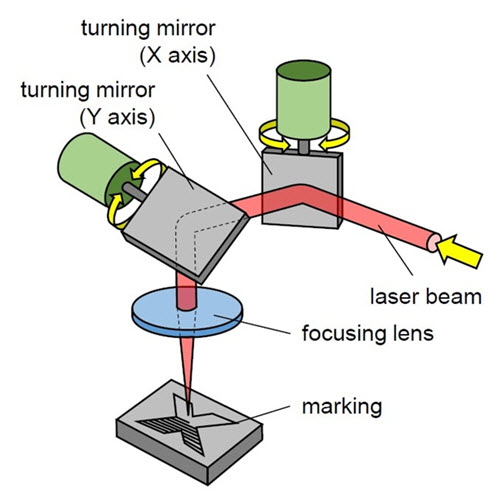
While laser marking machines demonstrate great potential in paper applications, some challenges exist in practical operation. Unlike metal processing, paper is highly sensitive to heat; therefore, careful attention to the parameter settings of the laser marking machine is crucial. We need to rationally adjust parameters such as laser power and speed according to the characteristics of the paper and the marking requirements, ensuring clear markings while preventing burning through the paper or causing edge scorching.
II. What Types of Paper Can Be Marked with a Laser Marking Machine?
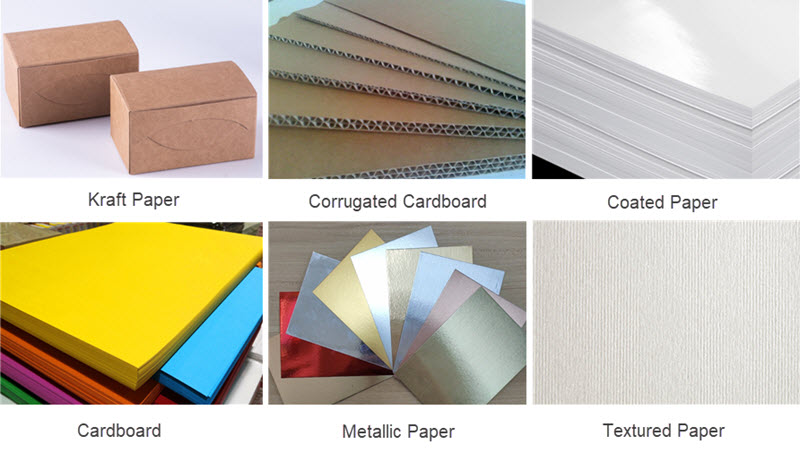
CO2 laser marking machines, with their 10.6μm wavelength, are suitable for marking many types of paper and paper-based composite materials. Their core advantage lies in their ability to achieve precise marking effects on paper of varying weights, thicknesses, and coatings by adjusting power, frequency, and speed. Let's take a look at the main paper types and typical application scenarios for laser marking machines:
█ Kraft Paper & Corrugated Cardboard
Laser marking is widely used for basic packaging papers such as kraft paper and corrugated cardboard. Using a laser marking machine, we can mark high-contrast and clear carbonized text on the light brown kraft paper commonly found in everyday life, such as express delivery boxes, outer packaging boxes, and eco-friendly bags. For corrugated paper, lasers can perform deep marking without crushing the internal corrugated structure, and are often used for printing logistics barcodes and batch numbers. Laser marking can achieve ink-free marking, unlike ink which can penetrate or blur.
█ Coated Art Paper and Cardboard
Due to its dense texture and smooth surface, this type of paper is often used in high-end packaging, such as food boxes and cosmetic boxes. Laser marking machines can precisely remove the colored ink or glossy film from the surface, revealing the white paper base, thus achieving fine logos, anti-counterfeiting textures, and other markings. This "de-lamination marking" effect is clean, crisp, aesthetically pleasing, and durable, with a highly modern feel, and the process is completely dust-free, making it particularly popular in the high-end packaging field.
█ Metallic & Specialty Paper
In the high-end tobacco and alcohol packaging, tea packaging, valuable gift boxes, and holiday greeting cards industries, laser marking machines can instantly vaporize the metallic foil layer on the surface of metallic paper, presenting a matte white or colored background, creating a strong contrast between solid and void. For greeting cards and invitations made of textured paper, the laser can micro-etch along the texture, increasing the brand's luxurious feel and creating creative effects that are difficult to achieve with traditional printing.
▨ Special Warnings:
1. Laser marking machines are strictly prohibited from processing chlorine-containing paper. When irradiated with laser light, chlorine-containing paper (such as PVC-coated paper) will produce toxic chlorine gas, which will not only corrode equipment but also harm our health.
2. A powerful smoke extraction system must be installed. Because paper is flammable, a smoke extraction system must be installed and turned on during processing, and all parameter thresholds must be strictly tested to prevent open flames.
III. What Are the Unique Advantages of Laser Marking in Paper Processing?
In the paper processing industry, laser marking technology is gradually replacing traditional inkjet printing, mechanical embossing, and die-cutting processes. Compared to traditional methods, laser marking exhibits the following core advantages in paper product applications:
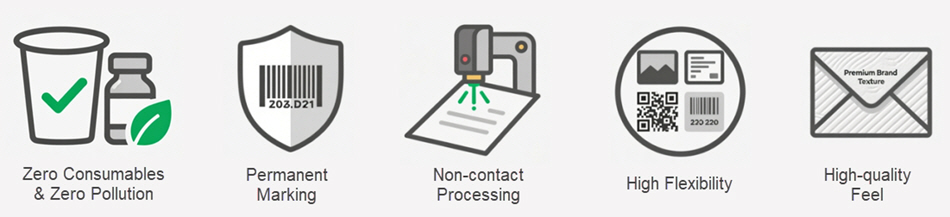
█ Zero Consumables and No Pollution
Paper laser marking technology requires no ink or other chemical consumables, leaving no chemical residue. For food packaging (paper cups, lunch boxes, straws) and pharmaceutical packaging, laser marking poses no risk of chemical migration, offering a higher level of safety and ensuring product compliance with FDA and GB food safety standards.
█ Permanent Marking
Laser-marked text, patterns, barcodes, etc., are formed within the paper fibers, making them wear-resistant, friction-resistant, and light-resistant. Even after long-term transportation, storage, or harsh environments, they remain clearly legible and cannot be altered or erased, facilitating the construction of a product lifecycle traceability system.
█ Non-contact Processing
The laser beam hovers above the paper surface for processing, eliminating physical contact. Fragile art paper or easily deformable corrugated cardboard will not be dented, wrinkled, or damaged by mechanical pressure.
█ High Flexibility
Utilizing a high-precision galvanometer system, CO2 laser marking machine can easily achieve real-time marking of any vector graphics, tiny QR codes, and variable data (serial numbers, dates) without the need for expensive molds or printing plates.
█ Creative Empowerment
By precisely controlling energy density, laser marking machines can achieve various effects on paper, such as color changing (carbonization), delamination (exposing the base material), and embossing (debossing). In luxury packaging, greeting cards, invitations, and other fields, lasers can create delicate textures and three-dimensional tactile experiences unattainable by traditional printing, greatly enhancing the product's quality and added value.
IV. What Are the Key Factors Affecting the Marking Effect of CO₂ Laser on Paper?
CO₂ laser marking machines use a high-energy laser beam to create controlled carbonization or micro-etching on the surface of paper, leaving permanent text, patterns, or QR codes. While laser technology is applicable to most types of paper, to achieve optimal contrast, clarity, and processing efficiency, we need to optimize the laser parameters based on the paper's material composition, thickness, coating, and surface texture. Let's look at the key factors affecting the final marking effect:
█ Paper Composition and Fiber Structure
Natural cellulose paper (such as A4 paper, cardstock, kraft paper, and corrugated paper) has extremely high absorption of 10.6μm laser light, making it the ideal marking material. However, it is important to note that laser processing is strictly prohibited on chlorine-containing materials (such as PVC-coated paper) to avoid generating toxic gases that could corrode the equipment.
█ Coatings and Additives
The coatings on the paper surface (such as gloss coatings and matte varnishes) will affect the color contrast of the laser marking. Some coatings, upon vaporization, reveal the underlying color, creating high contrast; however, some coatings containing metallic powder may reflect the laser, resulting in unclear markings.
█ Paper Thickness and Thermal Conductivity
The thickness of the paper also affects the laser marking effect. Thin paper (such as label paper and thermal paper) requires low power and high speed to prevent burn-through or heat diffusion that could cause smudging. Thicker paper (such as cardboard and paperboard) has a higher tolerance for error, is easier to achieve deep engraving or embossing effects, and is less prone to deformation.
█ Surface Texture
When marking on a smooth paper surface, sharp, intricate patterns are usually obtained. Rough surfaces (such as kraft paper and art paper) produce unique textured markings; although the edges may appear slightly diffused, this is often considered an artistic style rather than a defect.
█ Moisture Content
Excessive paper moisture content will absorb some laser energy to evaporate the moisture, causing the marking color to fade. Paper that is too dry is more prone to carbonization and blackening, but also more flammable, requiring strict power control.
V. Precautions for Laser Marking of Paper Products
When using a CO₂ laser marking machine to mark paper products, to ensure marking quality, production safety, and equipment lifespan, the following key points must be strictly followed:
█ Paper Selection
Avoid using paper with surface-coated metal foil or highly reflective coatings to prevent laser reflection and equipment damage. Laser processing of chlorine-containing materials (such as PVC-coated paper and vinyl materials) is strictly prohibited.
█ Laser Parameter Adjustment
Fine-tuning of parameters is required to balance effect and thermal damage. Find the optimal combination of power and speed through testing. When processing thin paper and thermal paper, use low power, high speed, and high frequency lasers to prevent burn-through or overall blackening. When processing thick and rough paper, power can be appropriately increased or speed reduced to achieve deep engraving or high-contrast carbonization.
█ Safe Production
Laser carbonization of paper generates a large amount of smoke and dust. A high-power fume extraction system is essential. Paper is flammable, therefore, dedicated personnel must be on duty during processing, or flame detection alarm devices must be installed to eliminate fire hazards.
█ Paper Surface Pretreatment
In addition to keeping the paper dry and free of oil, attention must also be paid to the flatness of the paper. Curled or wavy paper will cause changes in focal length, thus affecting the laser marking effect.
VI. Typical Applications of Laser Marking Machines in the Paper Industry
NITRATEK CO₂ laser marking machines offer superior marking effects on non-metallic materials, especially paper, wood, and leather, making them an indispensable tool in the paper packaging industry. Laser marking boasts significant advantages such as permanence, no consumables, environmental friendliness, and high anti-counterfeiting capabilities. Let's take a look at typical application scenarios of laser marking machines in the paper industry:
█ Industrial Packaging
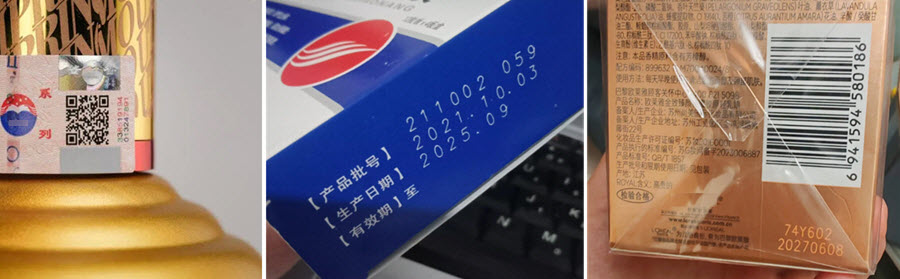
On busy industrial packaging production lines, laser marking machines are gradually becoming an indispensable tool. As cartons speed along the conveyor belt, the laser beam precisely "writes" production dates, shelf lives, and complex batch numbers onto the surface at a speed imperceptible to the naked eye. This is more than just marking; it supports true "flying marking," requiring no pause, and the resulting QR codes are clearly readable. Most reassuringly, these markings are permanent; even after friction, moisture, or even alcohol wiping, they will never blur or fade like ink.
█ Anti-counterfeiting Labels
Beyond the basic information marking mentioned above, laser marking machines can utilize the micron-level processing precision of lasers to help you engrave intricate micro-textures or embed encrypted dynamic QR codes on ordinary paper labels. These details are difficult to perfectly replicate using traditional printing processes, essentially giving each product a unique "ID card." For the high-end food, pharmaceutical, and luxury goods industries, which are plagued by counterfeit and substandard products, this low-cost yet highly secure "anti-counterfeiting paper label" solution is undoubtedly the most reliable shield to protect brand reputation.
█ Brand Personalization
In the consumer goods sector, laser marking machine has become a secret weapon for brands to enhance their image and personalize their products. For small-batch, customized gift processing, you only need to modify the design files on your computer, and in the next second, you can engrave complex brand logos or even personalized messages for each customer on limited-edition gift boxes. This flexibility of "modification and production on the spot" not only gives high-end gift boxes an embossed texture that is within reach, but also greatly shortens the new product launch cycle, allowing your brand to respond quickly to market trends and instantly capture customers' hearts with a unique visual and tactile experience.
Laser marking technology is more than just an alternative to inkjet printing; it's a key driver for the paper packaging industry's transformation towards high efficiency, environmental friendliness, and high-end products. Is your product packaging ready for an upgrade? If you'd like to witness firsthand the wonders lasers create on your paper products, please contact us for a free marking test. If you're looking for a suitable laser marking machine for paper processing, we'd be happy to assist you. Let the power of light give your products a unique mark.